Vad gör en pålitlig tillverkare av neodymmagneter för motorer?
En pålitlig tillverkare av neodymmagneter definieras av tre verifierbara funktioner: konsekvent högtemperaturmagnetisk prestanda, exakt anpassad formning och hållbar korrosionsbeläggning. Neodymmagneter, även kallade NdFeB-magneter eller magneter för sällsynta jordartsmetaller, är den starkaste kommersiellt tillgängliga klassen av permanentmagneter, och deras prestanda beror mycket på val av kvalitet, termisk stabilitet och ytskydd snarare än på allmänna marknadsföringsanspråk. Köpare som köper från en neodymmagnetfabrik bör utvärdera dessa tre funktioner direkt, eftersom de avgör om en magnet kommer att hålla sin magnetiska styrka på ett tillförlitligt sätt inuti en motor, sensor eller industriell enhet under många års drift.
Efterfrågan på magneter för sällsynta jordartsmetaller har ökat stadigt eftersom elfordon, industriell automation och energieffektiva apparater förlitar sig mer på kompakta, högpresterande magnetiska komponenter. Att förstå de tekniska egenskaperna bakom NdFeB-magneter, och hur en kvalificerad fabrik för sällsynta jordartsmagneter hanterar dem, hjälper ingenjörer och inköpsteam att fatta inköpsbeslut grundade på data snarare än allmänna försäkringar.
Förstå NdFeB-magneter och deras kärnegenskaper
Neodymjärnbormagneter sintras från en förening av neodym, järn och bor och magnetiseras sedan för att producera en extremt högenergiprodukt, vanligtvis från ungefär 30 till över 50 MGOe beroende på kvalitet. Denna energitäthet är det som gör att en relativt liten NdFeB-magnet kan generera samma magnetiska kraft som en mycket större ferrit- eller alnicomagnet, vilket är anledningen till att neodymmagneter har blivit standardvalet i kompakta, högeffektiva motorkonstruktioner.
Två egenskaper är viktigast när man utvärderar en magnet för en specifik tillämpning: remanens, som beskriver hur starkt magnetfältet förblir efter magnetisering, och koercivitet, som beskriver hur motståndskraftig magneten är mot avmagnetisering från värme eller motsatta magnetfält. Standardkvaliteter som N35 till N52 erbjuder hög remanens men begränsad termisk resistans, medan högtemperaturkvaliteter adderar koercitivitet till en viss kostnad till maximal magnetisk styrka. Denna avvägning är central för varför anpassade NdFeB-magneter specificeras efter kvalitet och avsedd driftstemperatur snarare än av enbart styrka.
Den globala efterfrågan på neodymmagneter fortsätter att öka
Industriforskningen kvantifierar denna tillväxt tydligt. Enligt en Fortune Business Insights marknadsrapport värderades den globala neodymjärnbormagnetmarknaden till cirka 20,37 miljarder US-dollar 2025 , beräknas nå ca 22,1 miljarder US-dollar 2026 , och förväntas växa till ungefär 44,15 miljarder US-dollar år 2034 , vilket återspeglar en sammansatt årlig tillväxttakt på cirka 9 procent. Denna tillväxt hänförs främst till ökande elfordonsproduktion, efterfrågan på vindkraftsgeneratorer och allt mer kompakt industrimotordesign.
Detta diagram plottar tre datapunkter som rapporterats av Fortune Business Insights, som spänner över 2025, 2026 och 2034-prognosen, snarare än en interpolerad trend från år till år. Den konsekventa lutningen uppåt över alla tre åren indikerar att efterfrågan på neodymmagneter återspeglar ett strukturellt flerårigt skifte snarare än en tillfällig topp kopplad till en enskild industrihändelse. Den kraftigaste ökningen sker mellan 2026 och 2034-prognosen, vilket tyder på att analytiker förväntar sig att tillväxttakten kommer att accelerera när elbilsproduktionen skalar ytterligare. För en tillverkare av neodymmagneter stödjer denna bana fortsatta investeringar i produktionskapacitet, anpassad formningskapacitet och utveckling av högtemperaturkvalitet snarare än ett försiktigt, kortsiktigt tillvägagångssätt. Köpare som utvärderar en långvarig leverantör av sällsynta jordartsmetaller kan läsa denna trend som ett bevis på att kategorin förväntas expandera stadigt snarare än kontrakt, vilket är viktigt för planering av fleråriga inköpsrelationer. Detta förklarar också varför fler tillverkare utökar sina anpassade NdFeB-magneter istället för att begränsa produktionen till standardkatalogformer.
Sintrade magneter dominerar global NdFeB-produktion
Inom den bredare neodymmagnetkategorin delas produktionen mellan sintrade och bundna tillverkningsmetoder. Enligt Transparency Market Research hade segmentet sintrade NdFeB-magneter den största andelen av marknaden och stod för 88 procent av den globala omsättningen 2025, med bundna och andra tillverkningsmetoder som utgör återstoden.
Det här munkdiagrammet visar att sintrad produktion inte bara är en vanlig tillverkningsmetod utan den överväldigande dominerande metoden, som innehar nästan nio tiondelar av den globala marknaden. Sintring producerar magneter med högre energitäthet och starkare magnetisk utgång än bundna alternativ, vilket förklarar dess dominans i krävande applikationer som motorrotorer och högprecisionssensorer. Bondade magneter förblir användbara för komplexa geometrier där sintring är opraktisk, men deras lägre magnetiska uteffekt begränsar deras andel i tillämpningar där vridmomentdensiteten är viktigast, såsom EV-traktionsmotorer. Ett ensiffrigt procentbundet segment återspeglar också att de flesta kunder prioriterar magnetisk prestanda framför den extra formflexibilitet som bondade metoder erbjuder. För en köpare av specialanpassade NdFeB-magneter som anger komponenter av motorkvalitet, stöder denna data standardisering till sintrad konstruktion såvida inte en specifik geometri verkligen kräver bondad bearbetning. Det är osannolikt att denna fördelning kommer att förändras dramatiskt på kort sikt, eftersom sintrade magneter förblir strukturellt bättre lämpade för motorkonstruktioner med hög vridmomentdensitet som driver de flesta aktuella efterfrågan.
Asien och Stillahavsområdet leder global produktion och konsumtion
Regionala data från samma Fortune Business Insights-rapport visar en starkt koncentrerad produktions- och efterfrågebas. Asien och Stillahavsområdet stod för ungefär 75 procent av den globala NdFeB-magnetmarknaden 2025, värderad till cirka 15,19 miljarder US-dollar, jämfört med Nordamerikas ungefär 9 procent aktie, värderad till cirka 1,8 miljarder US-dollar samma år.
Den här stapeljämförelsen illustrerar hur koncentrerad produktion och efterfrågan av NdFeB-magneter förblir inom Asien och Stillahavsområdet, som har ungefär åtta gånger marknadsandelen i Nordamerika. Denna koncentration återspeglar både närhet till bearbetning av sällsynta jordartsmetaller och ett tätt tillverkningsekosystem av motor-, apparat- och elektroniktillverkare som konsumerar magneter lokalt. En regional andel över 70 procent är ovanligt hög för en global kategori av industrimaterial, vilket indikerar djup vertikal integration mellan magnettillverkning och nedströms motormontering i regionen. För internationella köpare innebär inköp från en etablerad tillverkare av sällsynta jordartsmetaller baserad i denna region ofta kortare leveranskedjor och närmare tillgång till stödjande processer som beläggning och precisionsbearbetning. Nordamerikas mindre men ändå meningsfulla andel återspeglar växande ansträngningar för diversifiering av leveranskedjan, inklusive nya investeringar i inhemsk magnettillverkning som annonserats under de senaste åren. Denna regionala obalans förväntas bestå på kort sikt, eftersom att bygga jämförbar vertikalt integrerad kapacitet på andra håll kräver betydande tid- och infrastrukturinvesteringar.
Temperaturklasser: Matchande magneter till driftsförhållanden
NdFeB-magneter klassificeras i temperaturgrader som indikerar den maximala driftstemperaturen vid vilken magneten bibehåller stabil magnetisk prestanda. Standardkvaliteter som N35 till N52 är vanligtvis klassade för användning upp till cirka 80 grader Celsius, medan högtemperaturkvaliteter lägger till bokstäver som M, H, SH, UH och EH för att indikera gradvis högre termisk tolerans.
Betygssuffix
Ca. Max drifttemp
Typisk tillämpning
Standard (N)
Upp till 80°C
Konsumentelektronik, apparater med låg värme
M
Upp till 100°C
Motorer för små apparater
H
Upp till 120°C
Hushållsapparater motorer, fläktar
SH
Upp till 150°C
Servomotorer, industriell automation
UH / EH
Upp till 180-200°C eller högre
EV-traktionsmotorer, hybridfordonsmotorer
Allmän NdFeB temperaturklassreferens som används inom magnettillverkningsindustrin
Att välja rätt temperaturklass spelar roll eftersom en magnet som överstiger dess nominella driftstemperatur kan uppleva irreversibel avmagnetisering, vilket permanent minskar prestandan även efter att enheten har svalnat. Detta är särskilt kritiskt i EV-traktionsmotorer och navmotorer, där långvarig drift och värmeuppbyggnad gör UH- och EH-klassade anpassade NdFeB-magneter till ett praktiskt krav snarare än en valfri uppgradering. Servomotorer och robotiska ledmotorer arbetar vanligtvis i ett måttligt värmeområde där SH-magneter erbjuder en rimlig balans mellan termisk stabilitet och magnetisk effekt. Hushållsapparaters motorer och konsumentfläktar genererar i allmänhet mindre långvarig värme, vilket gör att magneter av M- eller H-grad kan prestera tillförlitligt utan extra kostnad för material av högre kvalitet. En kvalificerad tillverkare av neodymmagneter bör kunna rekommendera kvalitetsval baserat på den specifika termiska profilen för en applikation snarare än att ställa in den högsta tillgängliga kvaliteten oavsett behov.
Anpassade magnetformer för olika magnetkretsdesigner
Utöver kvalitet och beläggning spelar magnetgeometri en direkt roll i hur effektivt en komponent presterar inom en magnetisk krets. Det isometriska diagrammet nedan illustrerar fyra vanliga formkategorier tillverkade av en anpassad neodymmagnettillverkare.
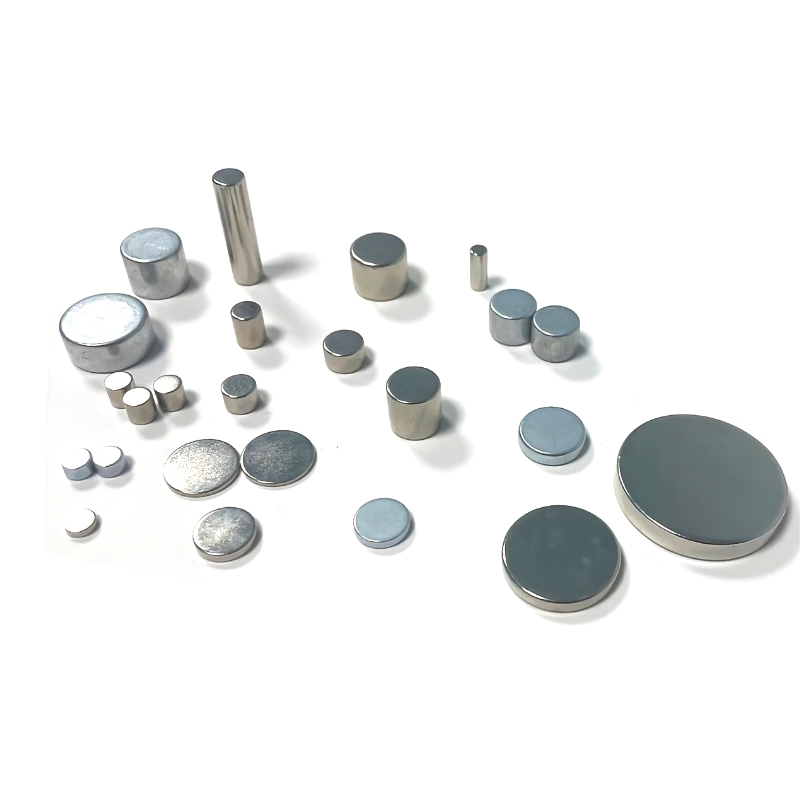
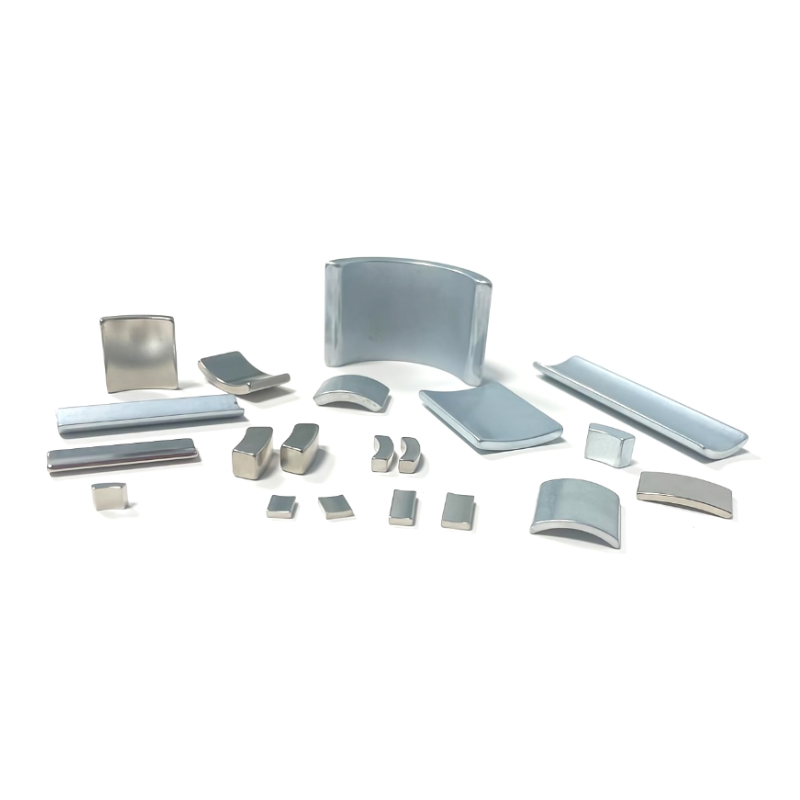
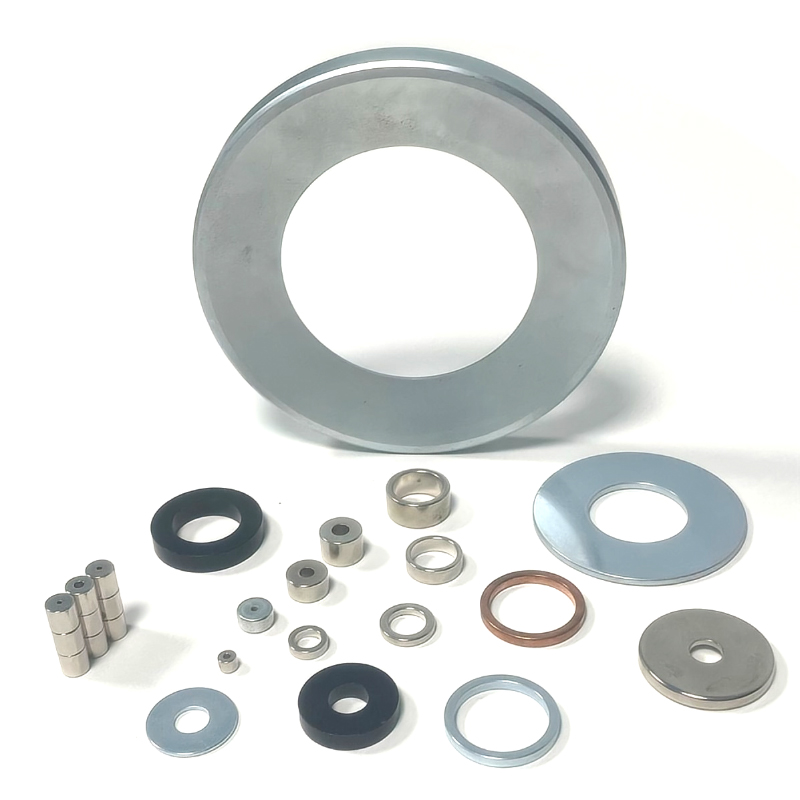
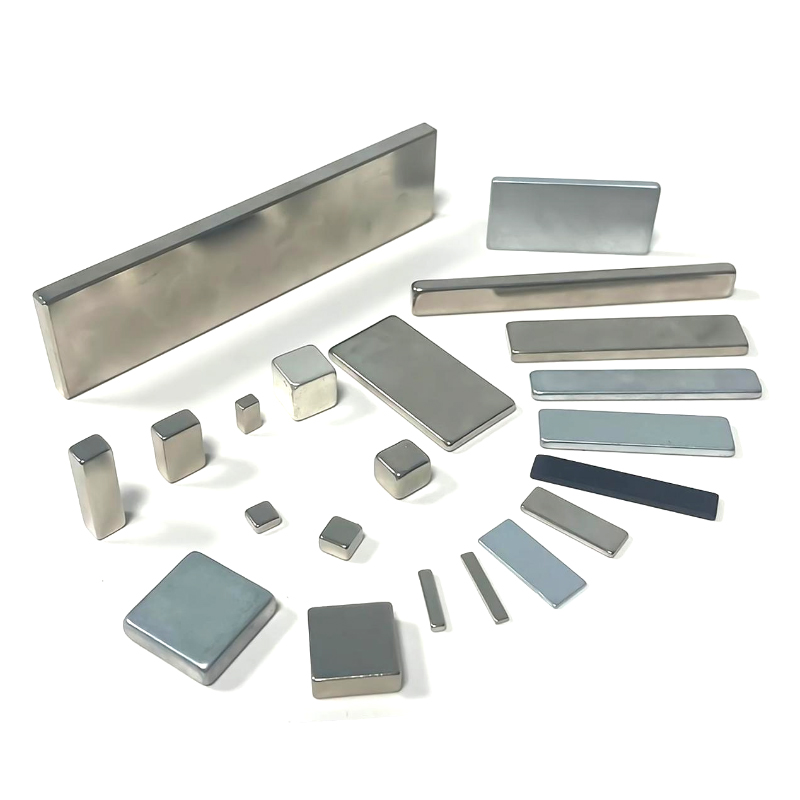
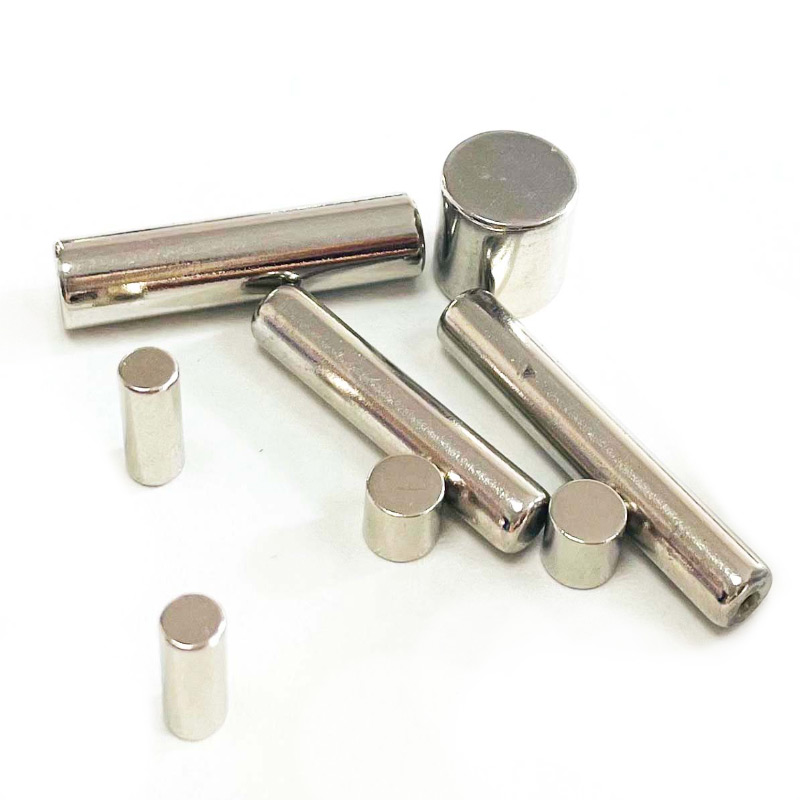
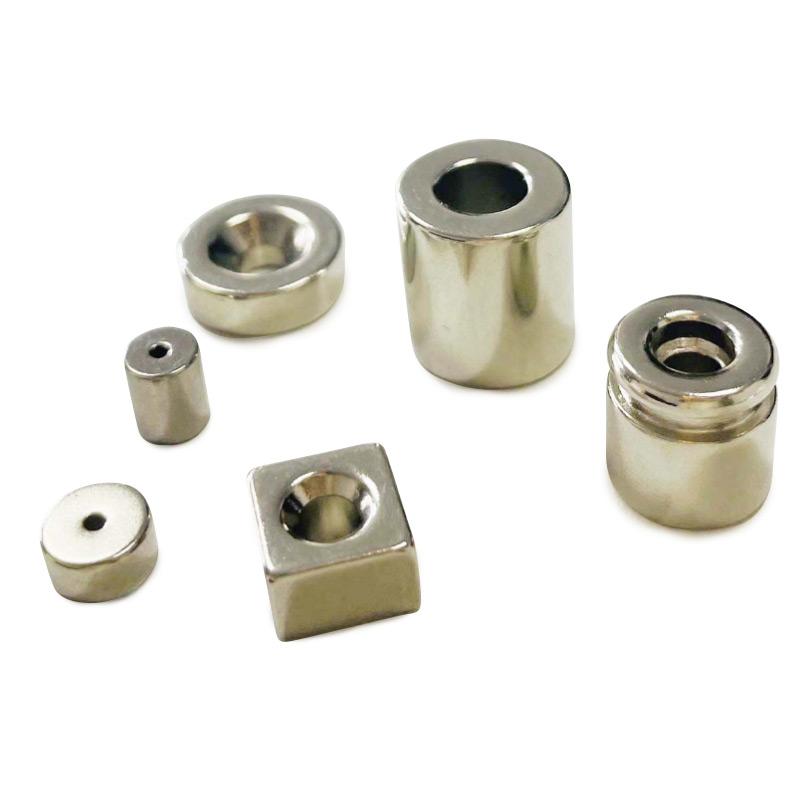
Skivmagneter är den vanligaste formen för axiellt flödesapplikationer som sensorkomponenter och små motorpolpar, och erbjuder en enkel, kostnadseffektiv geometri för jämn flödesfördelning. Ringmagneter, särskilt flerpoliga magnetiserade varianter, används i roterande pulsgivare och vissa motorrotorkonstruktioner där en kontinuerlig cirkulär flödesbana krävs runt en axel. Blockmagneter ger plana monteringsytor och används ofta i linjära ställdon, högtalarenheter och magnetisk separatorutrustning där en definierad rektangulär flödesyta förenklar monteringen. Båg- eller segmentmagneter är formade för att matcha krökningen hos en motorrotor och används ofta i borstlösa likströmsmotorer och synkrona permanentmagnetmotorer, eftersom deras krökta profil förbättrar flödestäthetens enhetlighet runt rotorns omkrets jämfört med flatblockmagneter som tvingas in i ett krökt hus. En tillverkare som erbjuder alla fyra formkategorierna, tillsammans med anpassade variationer, ger ingenjörer flexibilitet att matcha magnetgeometri exakt till en specifik magnetisk krets snarare än att anpassa en design kring begränsade standardformer.
Beläggningstekniker som förlänger magneternas livslängd
Obelagda NdFeB-magneter är mycket känsliga för oxidation på grund av deras järninnehåll, vilket gör ytbeläggning till en funktionell nödvändighet snarare än ett kosmetiskt tillskott. Nickel-koppar-nickel, vanligen skrivet som Ni-Cu-Ni, är den mest använda beläggningen i branschen, vilket ger en flerskiktsbarriär som motstår fukt och mekaniskt slitage samtidigt som den bibehåller god ledningsförmåga för vissa monteringsprocesser.
Epoxibeläggningar erbjuder ett alternativ för applikationer som kräver ytterligare kemikaliebeständighet eller elektrisk isolering, och väljs ofta för magneter som används i miljöer med högre luftfuktighet eller exponering för milda kemikalier. Andra beläggningar, inklusive zink och olika passiveringsbehandlingar, väljs utifrån specifika miljöexponeringskrav. En fabrik för sällsynta jordartsmetaller som erbjuder flera beläggningsalternativ, snarare än en enda standardfinish, gör det möjligt för köpare att matcha korrosionsskydd till den faktiska driftsmiljön, oavsett om det är ett förseglat motorhus, en utomhusvindturbingenerator eller en fuktig industrianläggning.
Tillämpningar inom motor- och industrisektorn
NdFeB-magneter med hög temperatur stöder ett brett utbud av motor- och utrustningstillämpningar inom flera industrier, var och en med distinkta termiska och geometriska krav.
Nya energifordon: EV-traktionsmotorer, navmotorer och hybridfordonsmotorer som kräver UH- eller EH-klassad termisk stabilitet
Industriell automation: servomotorer, PMSM- och BLDC-motorer, robotiska ledmotorer och magnetisk separatorutrustning
Hushållsapparater och hemelektronik: AC-kompressormotorer, tvättmaskinsmotorer och energieffektiva fläktar
Medicinsk och precisionsutrustning: tandimplantatmotorer och mikromotorer för medicinska instrument
Energi och tunga maskiner: solpumpsmotorer, turbiner, dragmotorer och hisstraktionsmaskiner
Utöver motorapplikationer används NdFeB-magneter också i stor utsträckning i ljudhögtalarenheter, sensorkomponenter och vindkraftsgeneratorer, vilket återspeglar materialets mångsidighet över både roterande och statiska magnetiska kretsdesigner.
Hur man utvärderar en tillverkare av neodymmagneter
Att välja mellan tillverkare som erbjuder liknande katalogspecifikationer kräver att man tittar förbi allmänna påståenden och in i specifika tekniska möjligheter.
Bekräfta att tillverkaren anger faktiska temperaturklasser (N, M, H, SH, UH, EH) istället för att bara lista generiska styrka.
Fråga om anpassade former som skiv-, ring-, block- och bågmagneter stöds, eftersom motordesigner ofta kräver geometrispecifika magneter.
Verifiera tillgängliga beläggningsalternativ, särskilt Ni-Cu-Ni och epoxi, för att matcha korrosionsbeständigheten till den avsedda driftsmiljön.
Utvärdera produktionsledtider, eftersom strömlinjeformade design-till-massproduktionsprocesser direkt påverkar hur snabbt en produkt når marknaden.
Granska erfarenheter inom relevanta sektorer, såsom nya energifordon, industriell automation eller hushållsapparater, snarare än enbart allmän magnettillverkning.
Om Ningbo Tujin Magnetic Industry Co., Ltd
Ningbo Tujin Magnetic Industry Co., Ltd är specialiserat på tillverkning och försäljning av högpresterande NdFeB-magneter. Med år av expertis inom magnetiska material fokuserar företaget på högtemperaturbeständiga motormagneter och skräddarsydda magnetiska lösningar byggda för precision och stabilitet. Tujin Magnetic Industry är känd för produktkvalitet, snabba ledtider och hög flexibilitet och har blivit en långsiktig partner för företag inom flera branscher.
Företagets högtemperaturmotormagneter är designade för att möta krävande krav på termisk stabilitet och bibehåller magnetisk prestanda över ett brett område från -40°C till 200°C eller högre. Dessa magneter tjänar applikationer inklusive nya energifordons drag- och navmotorer, industriella servomotorer, PMSM- och BLDC-motorer, robotiska ledmotorer, magnetiska separatorer, kompressor- och tvättmaskinsmotorer för hushållsmaskiner, mikromotorer för tandimplantat och medicinska instrument samt solpumpsmotorer och turbiner.
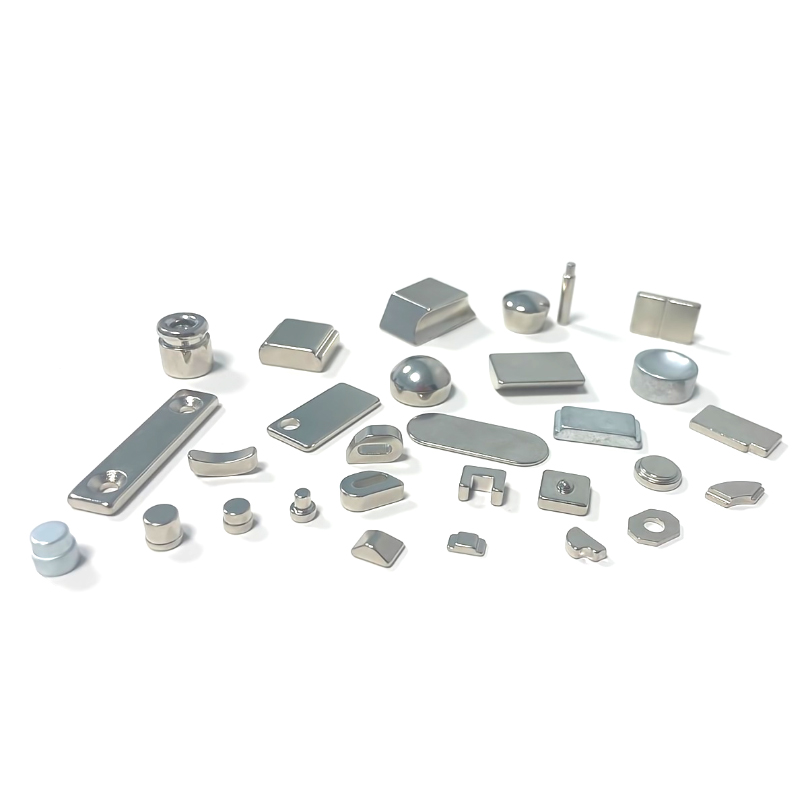
Tujin Magnetic Industry stöder komplexa och precisionsformade anpassade NdFeB-magneter, inklusive skiva, block, båge (segment) och flerpoliga magnetiserade ringdesigner, som tillgodoser olika krav på magnetiska kretsar. Företaget fokuserar på medelstora till högkvalitativa magneter för långsiktig tillförlitlighet, applicerar avancerade beläggningar som Ni-Cu-Ni och epoxi för att förbättra oxidationsbeständigheten och livslängden, och upprätthåller strömlinjeformade processer från design till massproduktion för att stödja kortare ledtider. Utöver motorer används företagets magneter även i högtalare, sensorer och vindkraftstillämpningar, vilket positionerar Tujin Magnetic Industry som en innovationspartner för både standard och anpassade magnetiska lösningar.
Vanliga frågor
F1: Vad är skillnaden mellan neodymmagneter och sällsynta jordartsmetaller? A1: Neodymmagneter är en specifik typ av sällsynta jordartsmetallmagneter gjorda av neodym, järn och bor; den bredare kategorin sällsynta jordartsmetaller inkluderar även samariumkoboltmagneter, även om NdFeB är den mest använda typen.
F2: Varför kräver EV-motorer högtemperaturmagneter? A2: EV-traktions- och navmotorer genererar ihållande värme under drift, så UH- eller EH-magneter används för att förhindra irreversibel avmagnetisering vid högre driftstemperaturer.
F3: Vilka beläggningsalternativ finns tillgängliga för NdFeB-magneter? A3: Vanliga beläggningar inkluderar Ni-Cu-Ni för allmän korrosionsbeständighet och epoxi för ytterligare kemikaliebeständighet och elektrisk isolering, vald baserat på driftsmiljön.
F4: Kan en tillverkare av anpassade neodymmagneter producera icke-standardiserade former? A4: Ja, många tillverkare stöder anpassade skiv-, ring-, block- och bågeformer för att matcha specifika krav på magnetkretsar och motorrotor.
F5: Vad bestämmer den magnetiska styrkan hos en NdFeB-magnet? A5: Styrkan bestäms i första hand av grad, vilket återspeglar balansen mellan remanens (fältstyrka) och koercivitet (motstånd mot avmagnetisering), snarare än storleken ensam.
Ningbo Tujin Magnetic Industry Co., Ltd. is an emerging technology enterprise integrating production, R&D, and sales. It specializes in the production of mid-to-high-end Neodymium NdFeB magnetic materials and related products.